The short answer
Clean water caught and dried within 24–48 hours can often be repaired. Flood water can't — it's contaminated, so the standard response is a flood cut and replacement. The deciding factors are how dirty the water was, how long the wall stayed wet, and whether the cavity could actually dry. That last one is the one you can change.
per sq ft to dry & mitigate (the repair path)
per sq ft to rebuild — drywall, flooring, trim (the replace path)
the window before mold turns "repair" into "replace"
What decides repair vs. replace
Restoration crews follow the industry standard (IICRC S500), and they're really weighing three things:
- →How clean was the water? Flood water is Category 3 ("black water") — the most contaminated class. Porous materials it soaked usually have to go, regardless of how fast you act.
- →How long did it stay wet? Mold can start in 24–48 hours (EPA). Past that window, drying isn't enough — it's remediation.
- →How wet is it now? Dry drywall reads under ~1%. Above roughly 17%, it's compromised and comes out.
The flood cut: why replacement is the default after a flood
Because flood water is contaminated and a sealed cavity won't dry on its own, the standard move is a flood cut — removing the drywall about 12 inches above the visible water line so the cavity, insulation, and framing can be cleaned, dried, and inspected. It's not crews being aggressive; it's the only way to deal with contaminated water trapped in a wall that can't ventilate.
The 2026 numbers
Here's what the two paths actually run, based on current restoration cost data. Square-foot figures are for the affected wall/floor area, not your whole house.
| Line item | Typical 2026 cost |
|---|---|
| Mitigation — extraction, drying, sanitizing | $3 – $7.50 / sq ft |
| Drywall replacement alone | $1.50 – $3 / sq ft |
| Repair & rebuild — drywall + flooring + trim | $20 – $37 / sq ft |
| Total restoration — national average | ~$3,900 (range $1,400–$6,400+) |
The pattern is clear: drying is cheap; replacing is not. Mitigation runs a few dollars a square foot. The moment a wall crosses into tear-out, you're paying 5–10× that to rebuild it. Every wall you can keep on the repair side of the line is real money saved — and the thing that keeps a wall on the repair side is whether it dried before mold set in.
The decision that lowers the bill next time
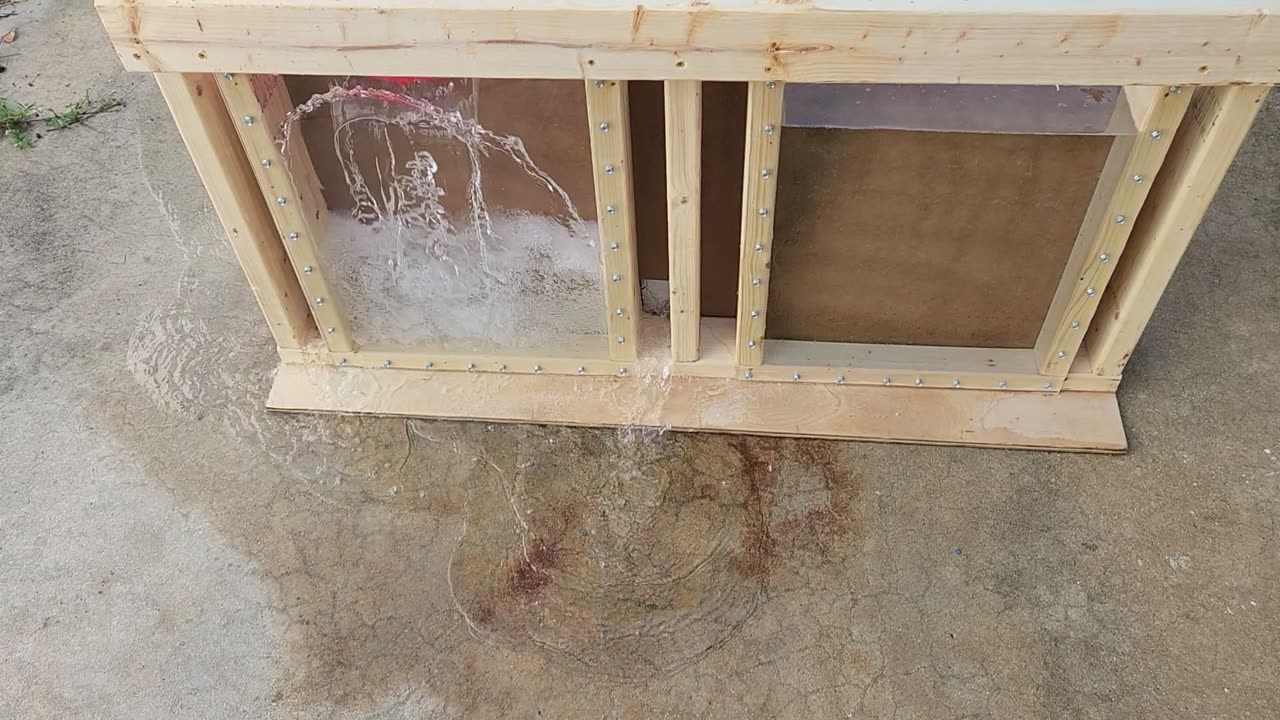
This is where most cost guides stop — at "act fast." But speed only helps if the wall can actually dry, and a standard wall fights you on that. Sealed at the base, the cavity holds contaminated water against the framing with no exit and no airflow, which is exactly why the flood cut exists. You can't dry your way out of a wall that can't drain.
Standard wall floods
- ✕ Water trapped at the base, can't drain
- ✕ Flood cut + replacement nearly every time
- ✕ $20–$37 / sq ft rebuild
- ✕ Same outcome the next time it floods
Rock Bloks wall floods
- ✓ Water drains out the base, cavity ventilates
- ✓ More walls stay on the dry-and-keep side
- ✓ Less tear-out, lower rebuild cost
- ✓ Built to handle the next flood, too
Rock Bloks is a patent-pending drywall drainage and ventilation system. The bloks mount at the base of each stud and lift the drywall off the base plate, leaving a continuous gap along the bottom of the wall. Water drains out through that gap instead of pooling, and air flows up into the cavity instead of being sealed in — so the wall can drain and dry on its own, inside the window that keeps it on the cheaper side of the repair-vs-replace line. When you're rebuilding flood-damaged walls anyway, it's the moment to build them so the next flood costs a fraction of this one. Same studs, same base plate, standard framing.
Rebuilding flood-damaged walls?
Tell us about your home or project. The founder will personally reach out — pricing, how many you'd need, and how to rebuild so the next flood costs a fraction of this one.
Get more information →Sources
- Angi / HomeAdvisor, Water Damage Restoration Cost [2026 Data] — angi.com
- HomeGuide, Water Damage Restoration Cost (2026) — homeguide.com
- IICRC S500 Standard for Professional Water Damage Restoration — iicrc.org/s500
- U.S. EPA, Mold Course (Chapter 4) — epa.gov/mold