The short version
You can't always keep storm water out of a Florida home — but you can control whether it drains back out or sits trapped in the wall and rots it. The prep that matters most isn't sandbags; it's how the wall is built. One inch of water can cost $25,000, and most of that bill is wet drywall that had no way to drain.
damage from just one inch of water inside a home (FEMA)
the Atlantic hurricane season window every year
named storms in NOAA's 2026 outlook — it only takes one
What the 2026 season actually means for you
NOAA's 2026 Atlantic outlook calls for a below-normal season — 8 to 14 named storms, 3 to 6 hurricanes, and 1 to 3 majors, with El Niño expected to hold activity down. That sounds reassuring, and it's easy to read "below-normal" as "I can skip prep this year."
Don't. A below-normal season is a basin-wide average, not a forecast for your street. 1992 was a quiet season — it produced Hurricane Andrew. From a homeowner's seat, the number that matters isn't how many storms form; it's whether one of them pushes water into your house. The prep below is worth doing whether the season is busy or not.
The wall is where the money goes
Here's why flooded walls dominate the repair bill. When water gets into a standard wall, gravity pulls it to the bottom of the cavity — behind the drywall, against the base plate, where it has nowhere to drain and no air can reach it. The surface looks like it dries, but a moisture meter still reads soaked inside. Restoration crews respond the only way they can: a "flood cut," removing the drywall about 12 inches above the water line so the cavity can finally dry. That's why a few inches of water turns into tear-out across whole rooms.
And it climbs fast. FEMA's own figures: about $25,000 from one inch in an average home, roughly $52,000 at six inches, and around $87,000 at two feet. Standard homeowners insurance doesn't cover any of it — flooding needs a separate policy.
Before-the-storm wall checklist
The 20-minute version most lists leave out
The real fix is in the rebuild
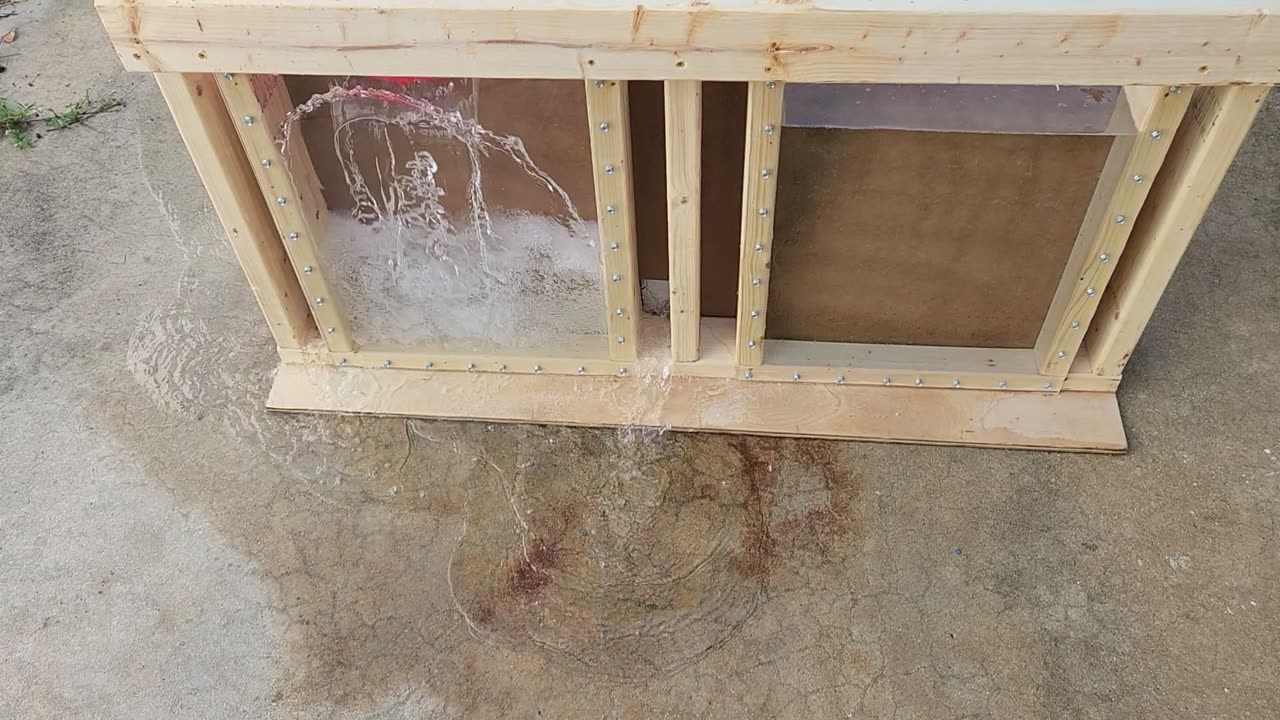
Prep limits the damage. But if your home has taken on water once, it will likely take on water again — and the way to break the cycle is to change how the wall handles it. The wall doesn't have to trap water. It traps water because it's built sealed at the base, with no exit and no airflow.
After the next storm — standard wall
- ✕ Water pools at the base with no exit
- ✕ Flood cut — drywall removed a foot up
- ✕ Weeks of drying, mold risk in 24–48 hrs
- ✕ Same vulnerability rebuilt right back in
After the next storm — Rock Bloks wall
- ✓ Continuous gap at the base — water drains out
- ✓ Air flows up into the cavity
- ✓ Dries in days, inside the mold window
- ✓ Far less demolition next time
Rock Bloks is a patent-pending drywall drainage and ventilation system. The bloks mount at the base of each stud and lift the drywall off the base plate, leaving a continuous gap along the bottom of the wall. Water drains out through that gap instead of pooling, and air flows up into the cavity instead of being sealed in — so a flooded wall can drain and dry on its own. Same studs, same base plate, standard framing. It's the difference between rebuilding to survive the next storm and rebuilding to repeat the last one. Invented in Cape Coral, by someone who flooded three times before he fixed it.
Getting ready for the season — or rebuilding after a storm?
Tell us about your home or project. The founder will personally reach out — pricing, how many you'd need, and whether Rock Bloks is the right call before the next storm.
Get more information →Sources
- NOAA, 2026 Atlantic Hurricane Season Outlook — noaa.gov
- FEMA, flood cost figures & flood insurance basics — fema.gov/flood-insurance
- U.S. EPA, Mold Course (24–48 hr window) — epa.gov/mold