The short answer
Removing mold from a wall is a moisture problem first and a cleaning problem second. Stop the water source, open the cavity so it can dry, remove porous material that is colonized (drywall and insulation), clean the framing, verify it is dry with a meter, then rebuild. The EPA does not recommend routine use of bleach for mold cleanup — detergent and water plus thorough drying is the standard approach.
stop the water — before anything else
above this, EPA suggests a remediation professional
drywall moisture reading that counts as dry
Before you start: is this yours to do?
Handle it yourself only if the affected area is small — the EPA uses about 10 square feet as the rough line — the water was clean, and nobody in the household is asthmatic, allergic, or immune-compromised. Call a remediation professional if the water was sewage or floodwater, if the area is larger, if it has spread into HVAC, or if you are not sure how far it goes behind the drywall. What is visible on the room side is usually the small end of it.
Personal protection, non-negotiable
An N95 respirator, gloves, and eye protection at minimum. Removing colonized drywall aerosolizes an enormous quantity of spores. Isolate the room with plastic sheeting, and turn the HVAC off so you are not distributing it through the house.
The sequence
- Find and stop the water. A supply leak, a drain, a roof, grade against the foundation, condensation on an uninsulated line, or a flood event. If the source is still active, everything downstream of this step is wasted work.
- Open the wall. Cut the drywall back to well past the visible growth — commonly a horizontal flood cut at 2 or 4 feet above the floor. You are doing two things: exposing the real extent, and finally giving the cavity a path for air.
- Remove the porous material. Colonized drywall and wet insulation come out and get bagged. Porous materials are not reliably cleanable — the growth is inside them, not on them.
- Clean the framing. Semi-porous and non-porous surfaces — studs, base plate, sheathing — are scrubbed with detergent and water, then dried thoroughly. HEPA-vacuum the dust when it is dry.
- Dry the cavity and verify it. Air movers plus a dehumidifier, running until a moisture meter confirms it — not until it looks dry. Compare readings to unaffected framing in the same house.
- Rebuild — and change something. Putting the wall back exactly as it was recreates the conditions that got you here. This is the moment to fix drainage and ventilation at the base of the wall.
About bleach
The EPA does not recommend routinely using biocides such as bleach to clean up mold, and cautions against ever mixing bleach with ammonia or other cleaners. On porous material bleach mostly discolors the surface while the growth continues inside; on framing, detergent, water, and genuine drying is the standard. Killing mold is not the same as removing it, and dead spores still cause reactions.
Why it keeps coming back
The most common failure is not bad cleaning. It is a wall rebuilt exactly the way it was.
In a standard wall the drywall runs down flush against the base plate and the baseboard seals over the joint, so the bay is closed at the bottom. Any future water — a small leak, a storm, condensation — collects in that sealed corner where it cannot drain out and no air can reach it. The cavity stays damp well past the 24–48 hour window the EPA cites for preventing growth, and you are back where you started.
Rebuilding so it does not repeat
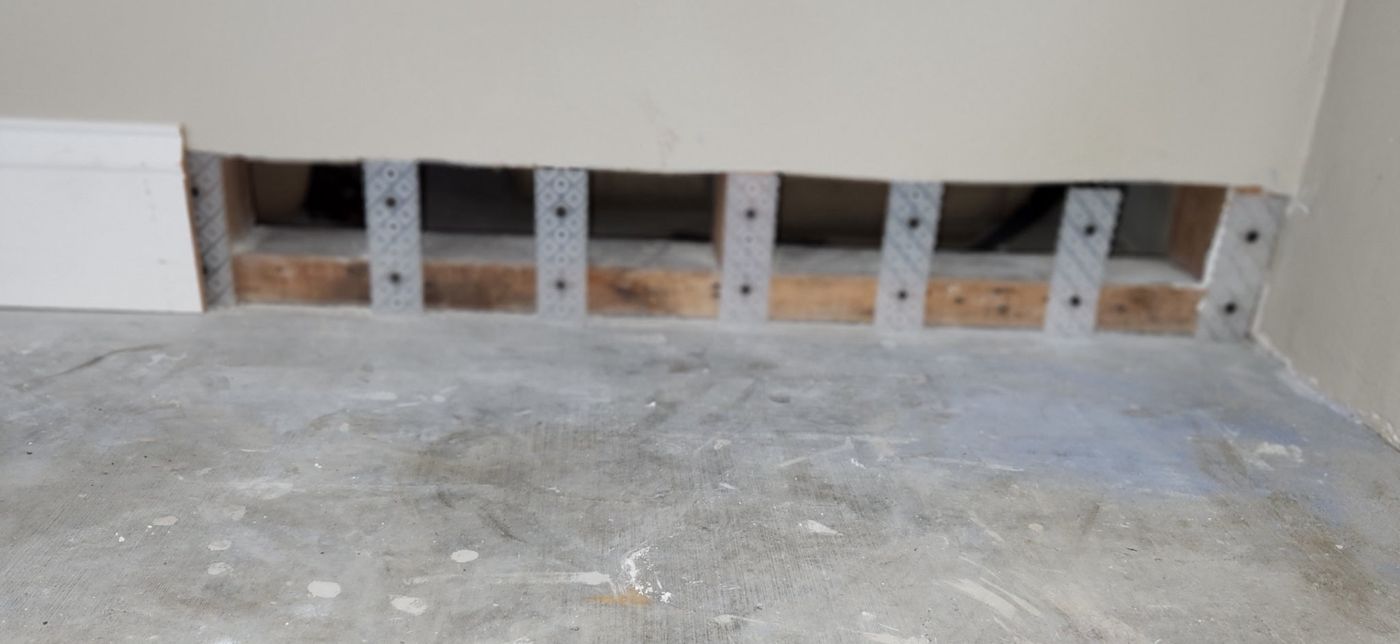
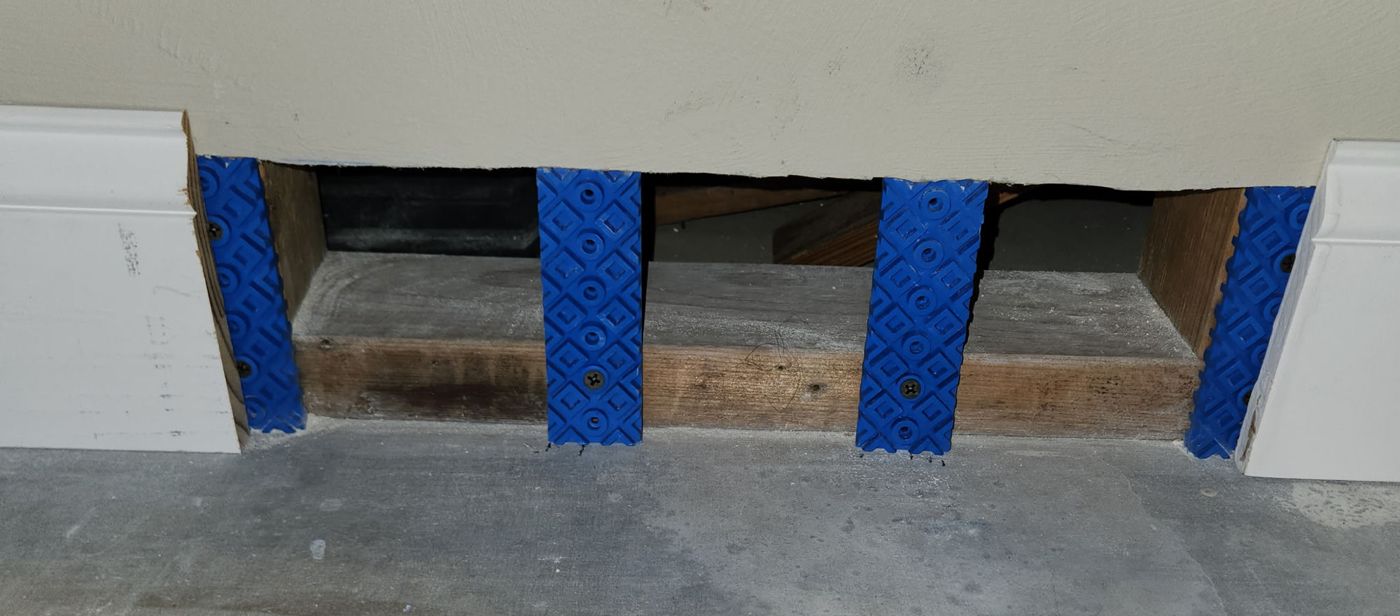
Rock Bloks is a patent-pending drywall drainage and ventilation system, and the rebuild is exactly when it goes in. The bloks mount at the base of each stud; the drywall is hung resting on top of them instead of flush to the base plate. That leaves a continuous gap along the bottom of the wall — hidden behind the baseboard — so water that gets into the cavity drains back out and air flows up into the bay. Same studs, same base plate, standard framing, no special tools.
Rebuilding the wall? Do it once.
Tell us about your home or project. The founder will personally reach out — how Rock Bloks installs during a rebuild, how many you would need, and whether it fits.
Get more information →Sources
- U.S. EPA, Mold Remediation in Schools and Commercial Buildings — epa.gov
- U.S. EPA, A Brief Guide to Mold, Moisture and Your Home — epa.gov
- U.S. EPA, Mold Course (Chapter 4) — epa.gov/mold
- FEMA, Dealing with Mold & Mildew in Your Flood-Damaged Home — fema.gov
Common questions
Can I just spray the mold and paint over it?+
No. Painting over mold traps it and hides it while the growth continues underneath. Mold-resistant paint is for preventing growth on a clean, dry surface, not for covering an existing colony.
Does bleach kill mold in walls?+
The EPA does not recommend routine use of biocides like bleach for mold cleanup. On porous material it mostly bleaches the surface while growth continues inside, and killing mold is not the same as removing it — dead spores still trigger reactions.
Do I have to remove the drywall, or can I clean it?+
Drywall is porous, so once it is genuinely colonized the growth is inside the material and it comes out. Surface dust on otherwise dry, sound drywall is a different case and can be cleaned.
How do I know when the cavity is dry enough to close up?+
A moisture meter, not a look. Drywall under about 1% is dry; framing should read close to unaffected framing elsewhere in the same house. See how long moisture stays in walls.
What stops it from coming back?+
Removing the moisture condition. Stop the source, and give the cavity a permanent way to drain water out and let air in — otherwise the next wetting event restarts the same cycle.